
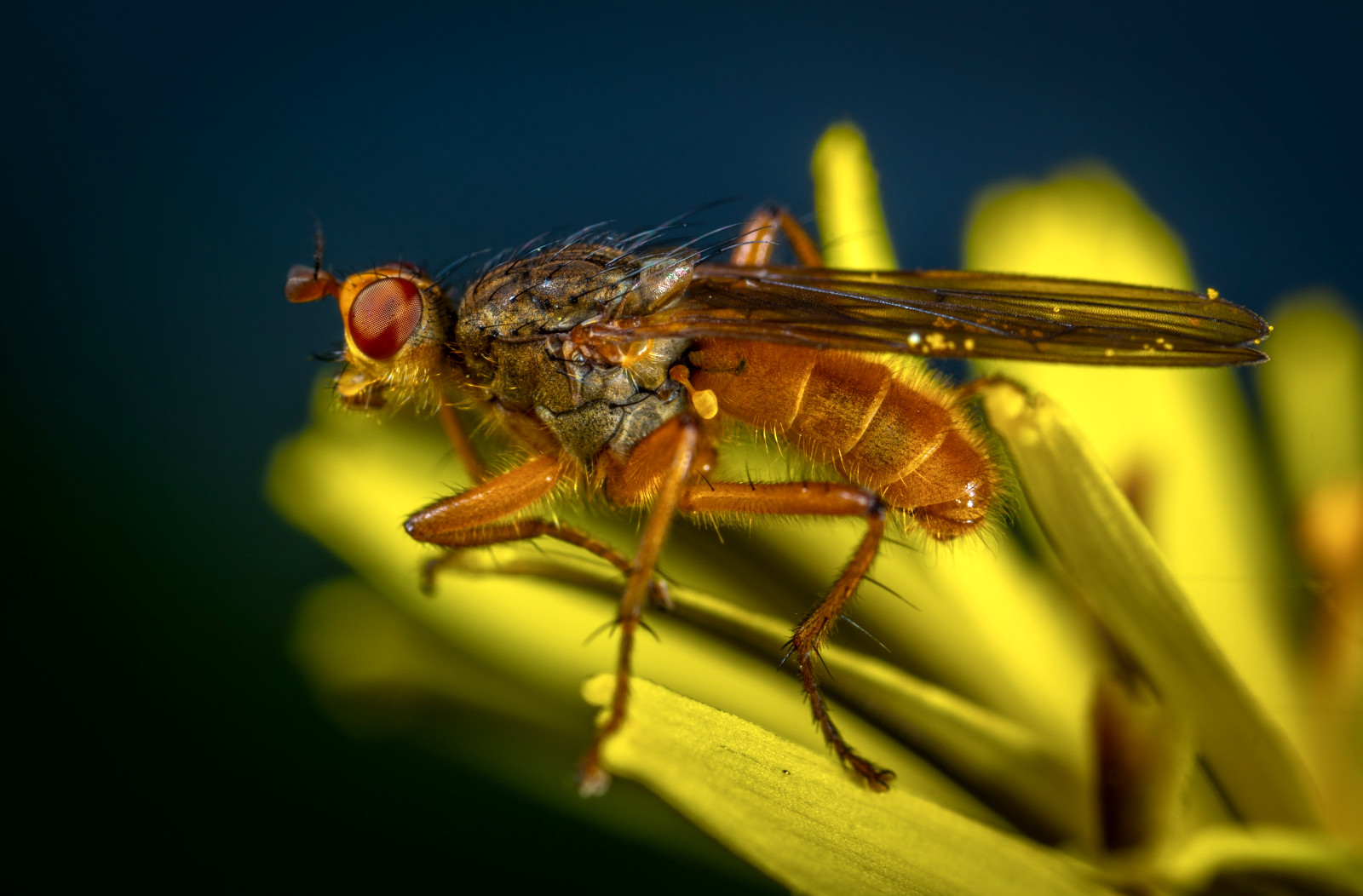
A bioscience lab set out to confirm that a little hardship is good for you. Tens of thousands of fruit flies had other ideas
Natalie Testa
Read this story in a shorter version, written for younger readers
“In Dutch, we have an expression, ‘monnikenwerk,’ which means work for monks – that they like doing mundane work, repetitive work. To do certain science, you need to like that a bit.”
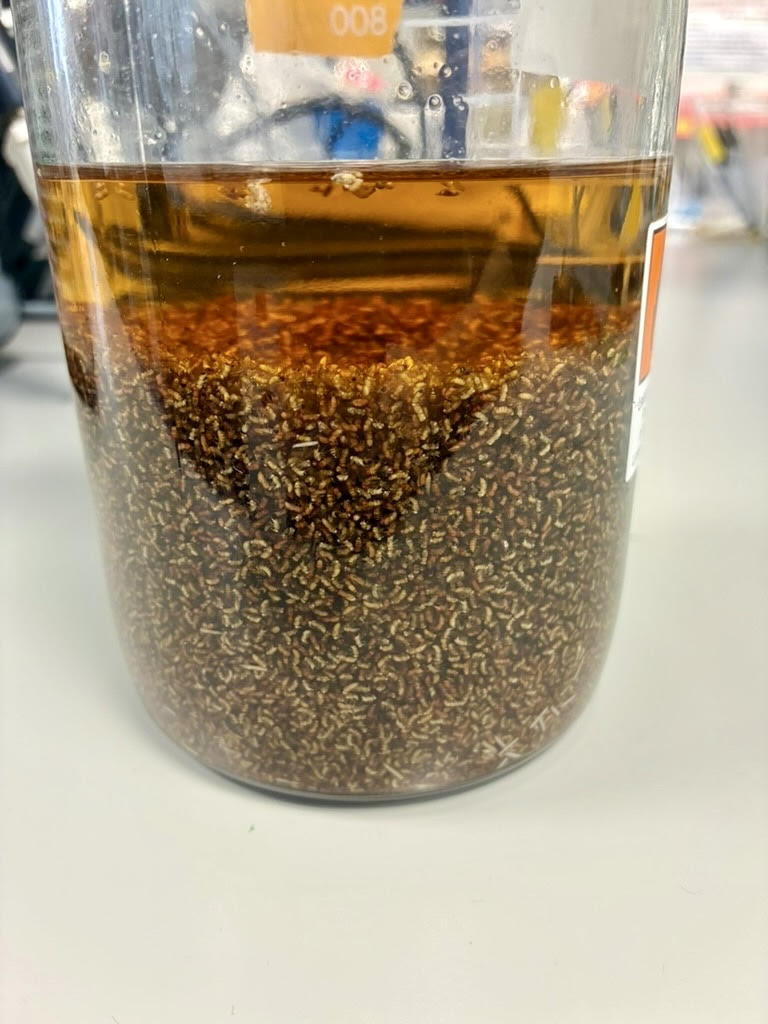
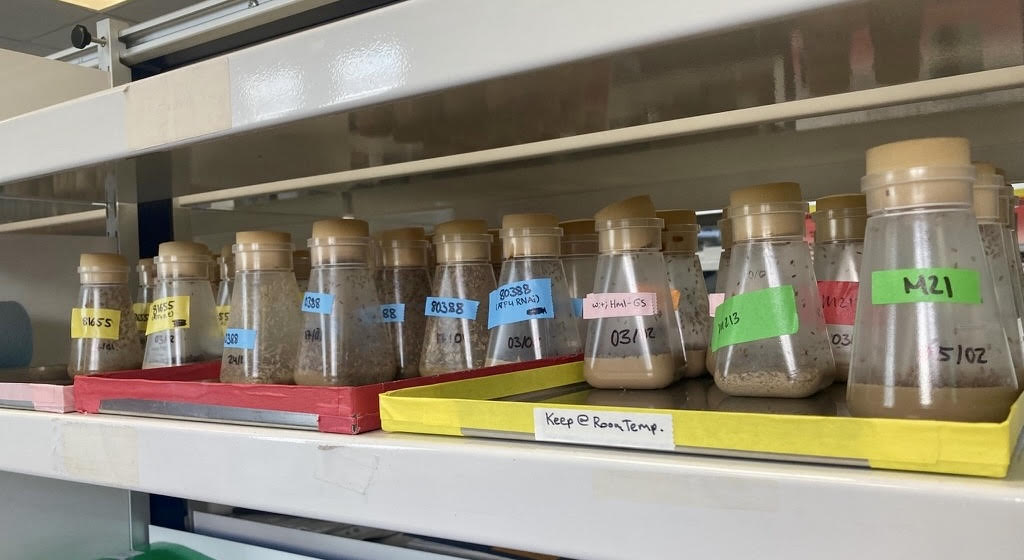
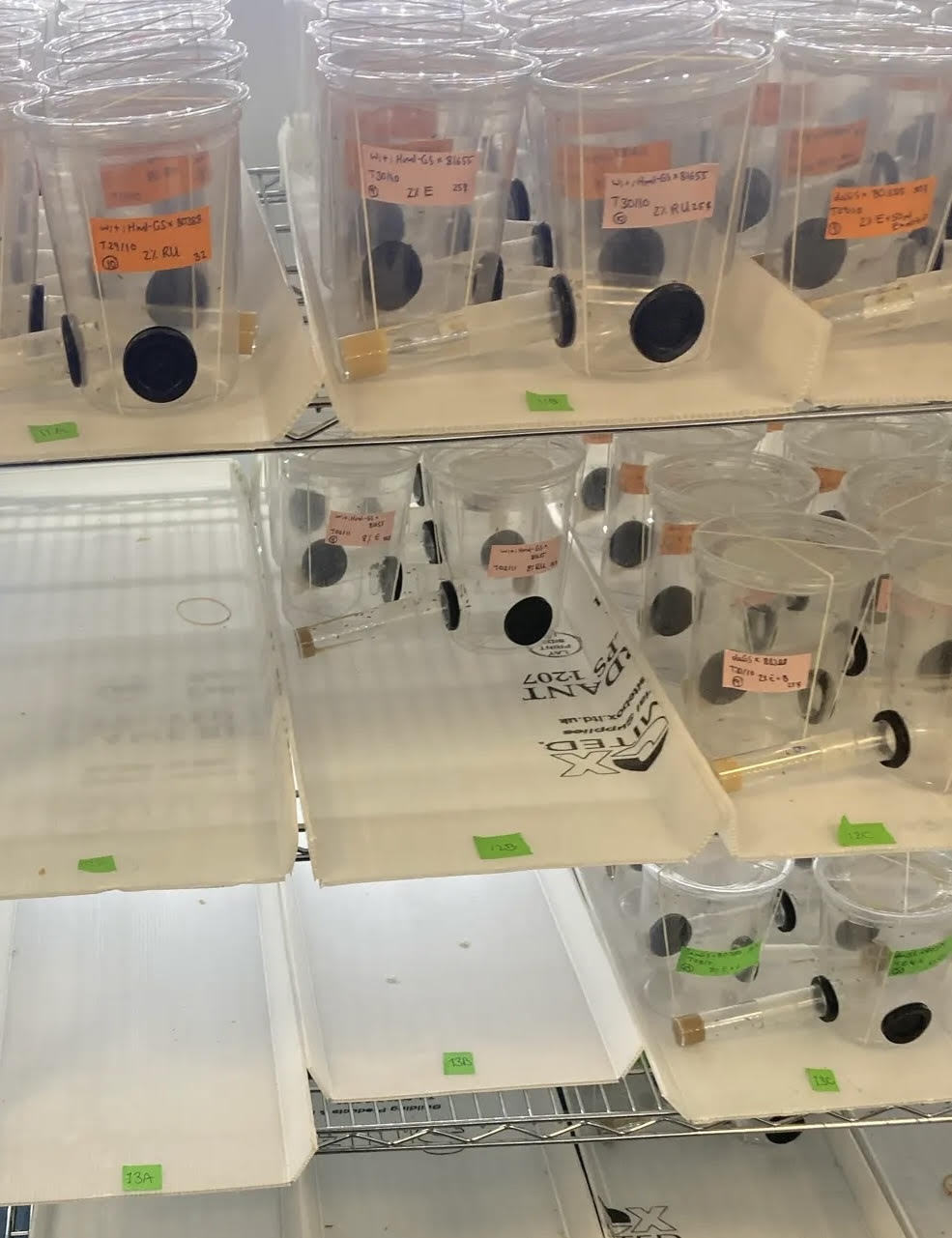
Mirre Simons is describing his own trade. A senior lecturer in the School of Biosciences at the University of Sheffield, he studies the biology of aging. His lab has room for 100,000 fruit flies, kept in cages of about 100 apiece. The experiment in this story used between 10,000 and 25,000 of them. Every other day, someone feeds them and carts off the corpses. The cages themselves are cleaned once, before an experiment is set up, and then left alone.
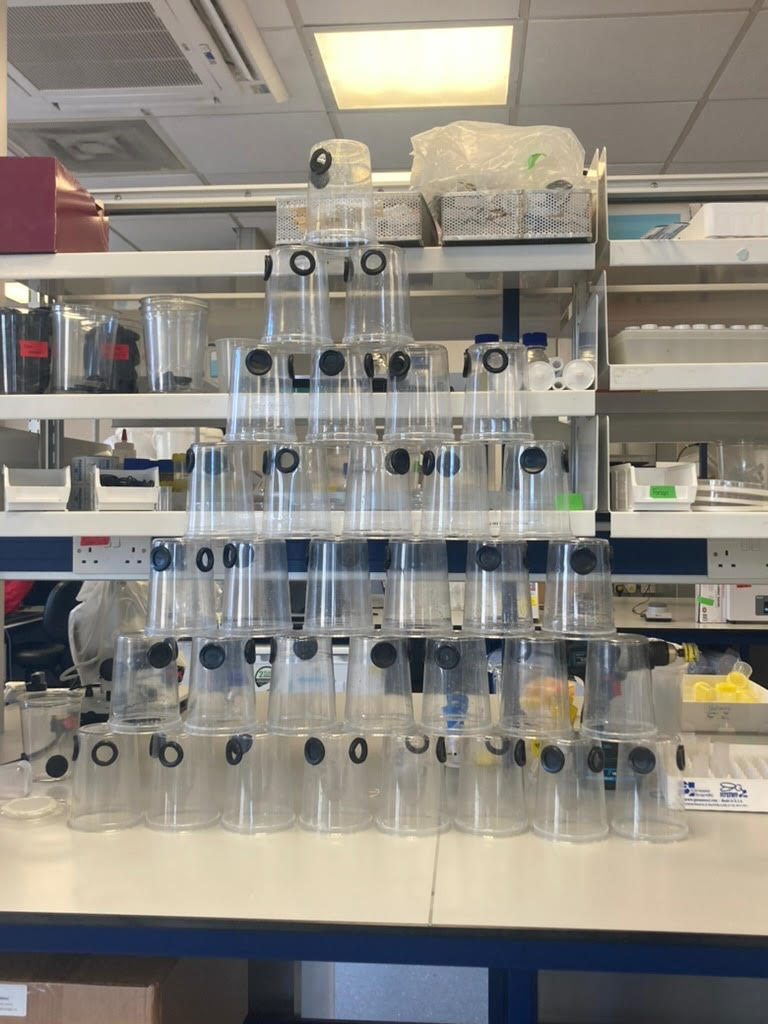
“If we say of an experiment with 100 cages, which would be quite normal, and 10 die in each, we’ve counted 1,000 dead flies and we pootered them out individually,” Simons says. Each one is aspirated up by hand – “pootered,” in the lab’s parlance – and tallied. It is, by any measure, monk work.
The work rewards a particular temperament.
“It does take a bit of a certain personality, and a certain concentration to keep remembering why you’re doing it,” he says. Even the labeling is a discipline – every tube marked so no one confuses one diet for another. Simons has one dependable volunteer for that job.
“My 11-year-old likes labeling tubes,” he says.
The whole enterprise is fragile. The flies live in a single room held at constant temperature and humidity, part of a lifespan experiment that runs for months.
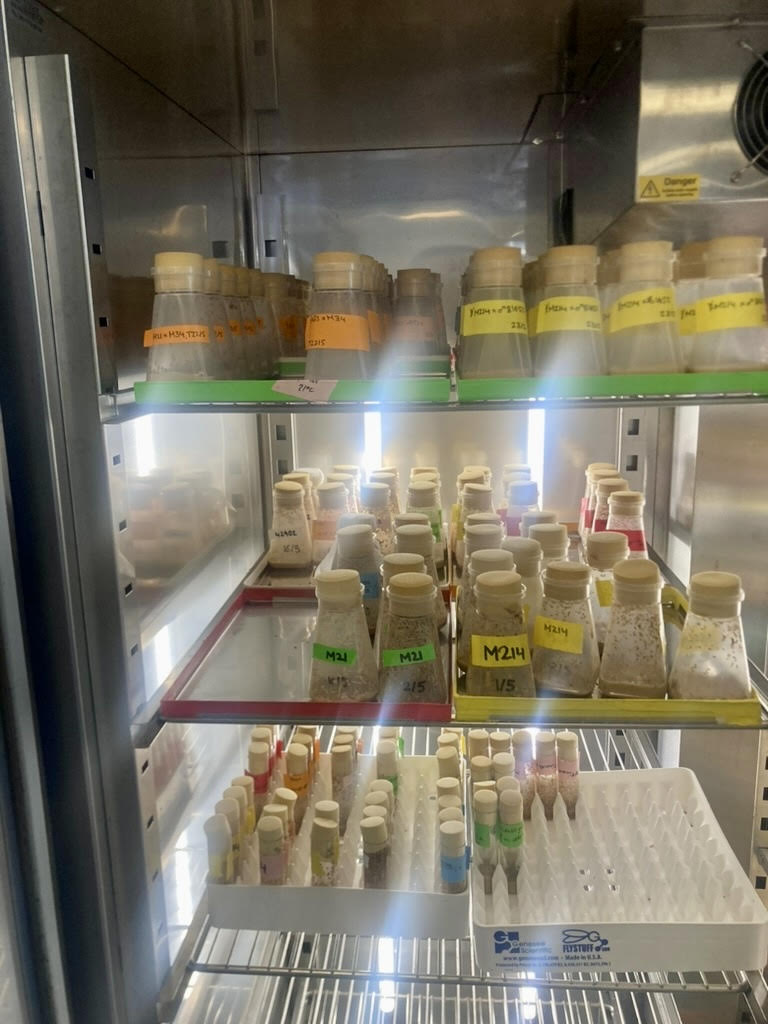
“We always worry,” Simons says. “Let’s say we do a huge experiment. Something breaks, and then you need to start all over again. Luckily, so far it’s only happened once.” The climate control does send an alert to his phone when it fails – usually, he notes, too late to help.
The counting doesn’t pause, even for holidays. The university shuts for a week or so at Christmas, but the flies still need feeding and tallying every other day, so Simons and a labmate rotate through.
“Because the year has 365 days, it’s always one day out,” he says – so they nudge the schedule to skip Christmas Day itself.
“The majority of our one experiment died all over Christmas,” recalls Miriam Götz, the student who ran it. She came back to a nearly empty cage.
Each dead fly is one small data point in the attempt to answer the larger question: how do organisms grow old?
A little stress, a longer life
Simons’s lab investigates the mechanisms of aging and how aging feeds diseases such as cancer and dementia. It also runs, he cheerfully admits, without much of a plan.
“Usually it just would go where it takes us,” he says, “a luxury of working with flies,” which live fast and let you try things. Recently that meandering approach produced a result that ran against the grain.
For years, aging research has relied on the idea that a little stress is good for you. Not the crushing kind – severe stress is clearly harmful – but small, survivable doses that switch on a cell’s own maintenance crews.
Biologists call one such system the integrated stress response, or ISR. Think of it as a cellular emergency protocol. When a cell hits trouble – a virus, badly built proteins piling up, amino acids running short – it cuts down on everyday protein-making, diverting its resources to a small group of survival genes. Less building, more coping.
The lab’s home ground is diet – why eating less (dietary restriction, in the jargon) makes so many species live longer. The ISR sits right in that territory. Simons came upon it during a conversation with Mark McCormick, a biologist at the University of New Mexico. McCormick’s lab had found that certain drugs lengthen the lives of yeast and worms – not by feeding them, but by chemically mimicking starvation. That mimicry trips a sensor (a protein saddled with the name GCN2 – General Control Nonderepressible 2, for the particular) that switches the whole emergency response on.
“It links into our main interest,” Simons says, “which is how nutrients and metabolism regulate aging.”
At the heart of the response is a protein called ATF4. It is less a repairman than a shift manager. Once the alarm sounds, it switches on the genes a cell needs to weather hard times. These genes bring in amino acids (the building blocks of proteins), recycle worn-out parts, and rebalance the cell’s chemistry.
But if the damage runs too deep, ATF4 stops trying to save the cell. Instead, it pushes the cell toward apoptosis – programmed cell death. This is when the cell methodically takes itself apart rather than linger and endanger the tissue around it. Which way ATF4 goes – repair or removal – depends on how hard the alarm is pushed, how long it keeps ringing, and in which part of the body. That is the hinge the whole fly study turns on.
The idea that an ATF4 nudge lengthens life had solid support in yeast and in the roundworm C. elegans. Nobody quite knew how that nudge translates into extra days. That was what Götz particularly wanted to know.
Enter the flies
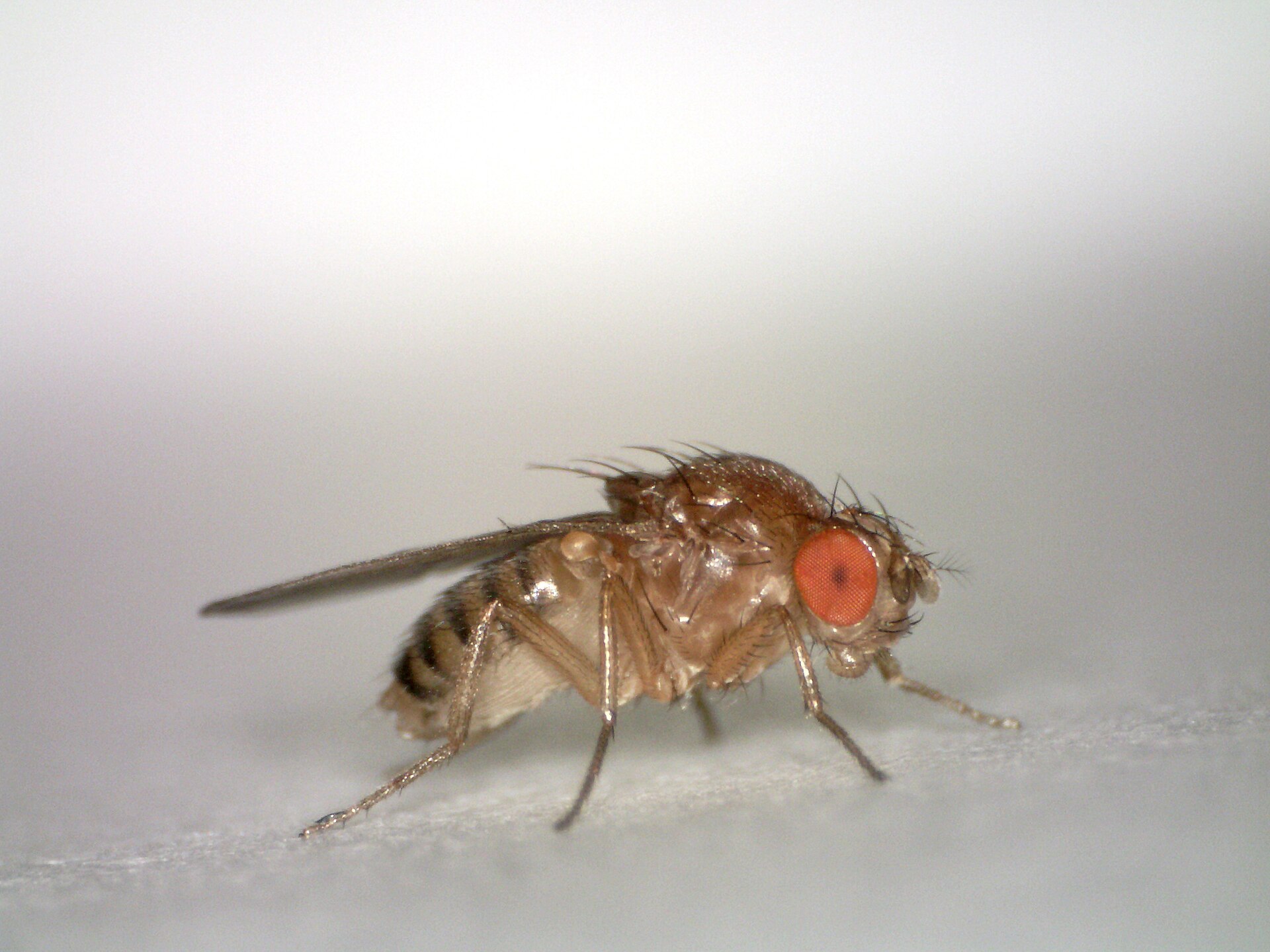
The fruit fly, Drosophila melanogaster, was the right tool for the job: quick, cheap, easy to breed, and superb for diet experiments. Götz – then a master’s student, who had already done some prior work in Simons’s lab – took the question on as her thesis.
The team raised flies on two diets, one group fed as much as it liked, the other kept on short rations. They used genetically altered flies in which the fly’s own version of the pathway could be turned up or down in adulthood. (The fly’s ATF4 goes by dATF4 – d for Drosophila.) Then they did what the lab does best. They waited, and they counted.
They expected the familiar pattern: nudge the stress response, and the flies should live a little longer.
The wrong direction
The results came back backwards. Activating dATF4 shortened the flies’ lives. Suppressing it lengthened them – and did so on both diets, well fed or restricted alike. A little stress was supposed to help. The flies hadn’t read the memo.
Götz had no ready explanation.
“I was confused for a very long time. I had a lot more questions than answers for a very long time,” she says. “Then, when I started looking and digging into the literature a bit more, it started clearing up a bit. And then I went running a lot. And I like thinking when I go running.” A few kilometers in, it turned over: maybe the reversal wasn’t a mistake at all. The literature backed her up – in some contexts, suppressing the pathway is exactly what helps.
Where Götz saw a puzzle, Simons saw a green light.
“…If you kill flies or it makes something live short, it’s not very interesting. Once something lives longer, and it seems repeatable, it’s probably interesting.”
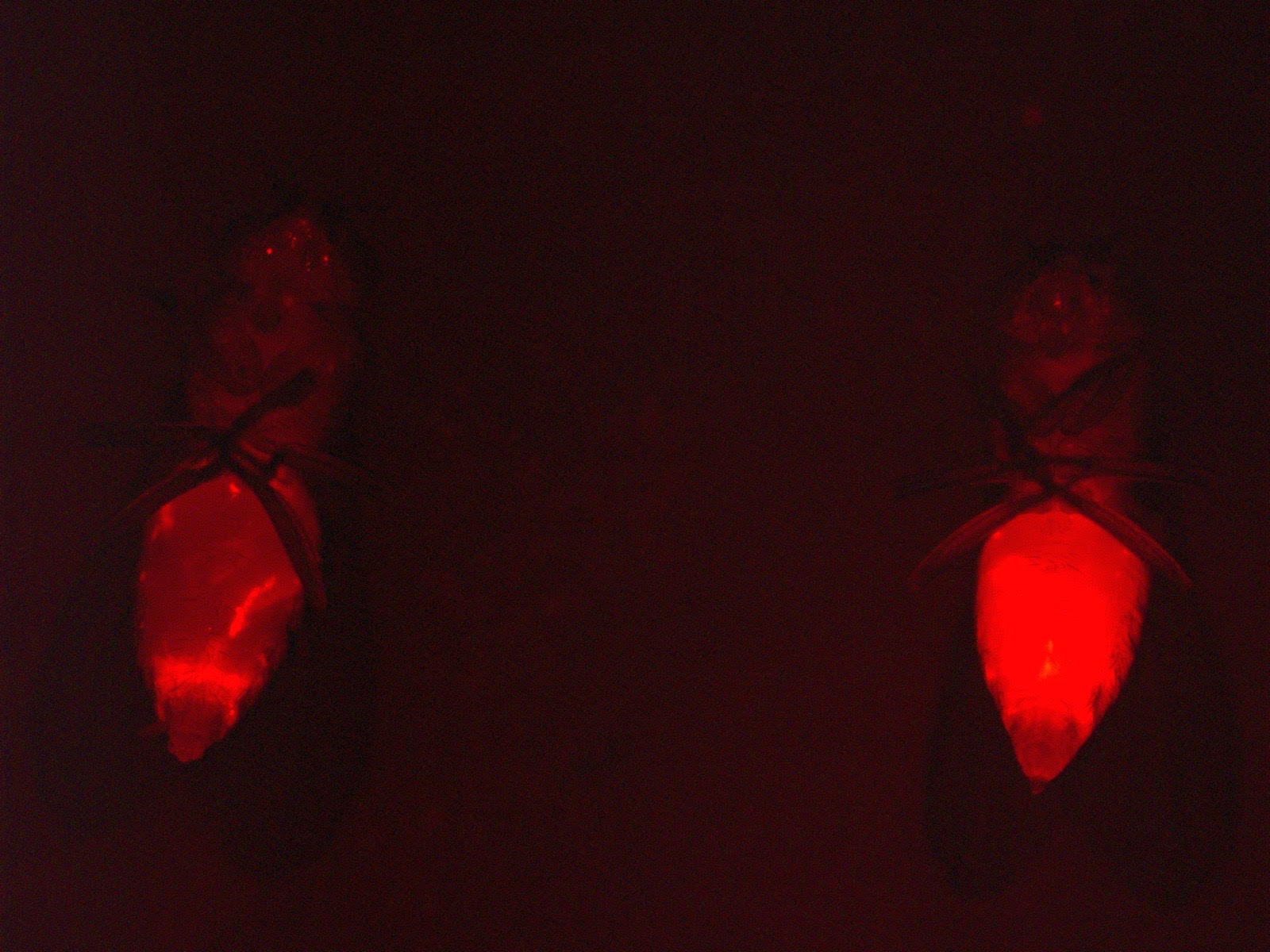
Before the team could ask why suppressing dATF4 extended a fly’s life, they had to be sure they had indeed done so.
So they reached for a fluorescent reporter – a marker, built by another lab, that makes the flies glow brighter than their baseline under the microscope when dATF4 is active, and dimmer when the pathway is turned down. They were reassured when four or five sessions showed the same thing: turn dATF4 down, and the glow fades with it.
Keep questioning
Simons is wary of overstating his case.
“If we’re a bit self-critical, which I think is good in science, we need to always keep questioning,” he says. “It doesn’t mean the early work is wrong or that the general hypothesis is still wrong. It’s just like we are just finding that it’s opposite in this certain context.” The earlier findings still stand, in other words; in these flies, under these conditions, the effect runs the other way.
A reviewer – one of the outside scientists a journal asks to check a paper before it is published – asked the team to run a dose-response experiment (turning the pathway up by different amounts) to check whether a gentler push on the pathway might still produce the protective effect other labs had seen. They ran it, at three strengths, and the answer was no.
The harder the team pushed the pathway, the shorter the flies lived, and even the gentlest push shortened their lives. That result went into the published paper, though the authors note that an even smaller dose, or one aimed at a single tissue, might yet behave differently. Another set of experiments did not make it in. The team also had other data they wanted to explore, but a batch of the flies being studied for it – and their controls – died far quicker than usual. With the clock running on their revisions, there was no time to repeat it. So they left it out.
“We have suggestive data, but we wanted to have spent more time exploring it,” Götz says.
A more complicated picture
This work does not mean that decades of aging research are wrong. It means the link between stress and lifespan depends on circumstances more than the field assumed. The details may decide it. How hard the pathway is pushed. How long it stays on. Which tissue it acts in.

Simons has a hunch about why. Their suppression was a gentle nudge; the over-activation was a heavier hand.
“Maybe it’s actually just mild disruption of a major stress pathway is good for you,” he offers. There’s another possibility, too – that the lab’s flies are simply a bit stressed to begin with, which would make turning the pathway down helpful in their particular case. Both are guesses. Which is the honest answer, and the reason he wants other fly labs to run it again and see where the difference really comes from.
Looking downstream
Simons has his own next step in mind. One collaborator on the paper, Fumiaki Obata – “Aki” – of RIKEN in Kobe and Kyoto University, has spent years working out how flies sense particular amino acids in their food through this very pathway. His group showed, for one, that a single amino acid, tyrosine, acts through ATF4 to switch on a fly’s response to a low-protein diet. Simons wants to bring that kind of molecular detail to the question of how ATF4 actually connects to lifespan.
“I’ve never thought of this pathway before,” he admits.
The brain child
For Götz, this was her thesis, her first paper as lead author.

“It still feels slightly surreal,” she says. “It was a big brain child. It feels nice to see it’s out there and no longer just in my brain.” The project clarified for her that she’s drawn to the mechanistic side of biology, the how-does-it-actually-work layer beneath a result. Simons, for his part, would like to keep her on. There are funding applications in the works to make it happen.
For Simons, the appeal was always the not-knowing.
“If we knew already what would happen, we wouldn’t need to do the experiment,” he says. The finding doesn’t close a question so much as open several: in which species, which tissues, at which dose does turning ATF4 up help – and when does turning it down help instead?
That’s work for other labs now. Till then, the monk work continues.
Read this story in a shorter version, written for younger readers

Natalie Testa is a science writer and researcher specializing in ocean conservation. She has a background in scientific research and marine biology.
Read the original article here