
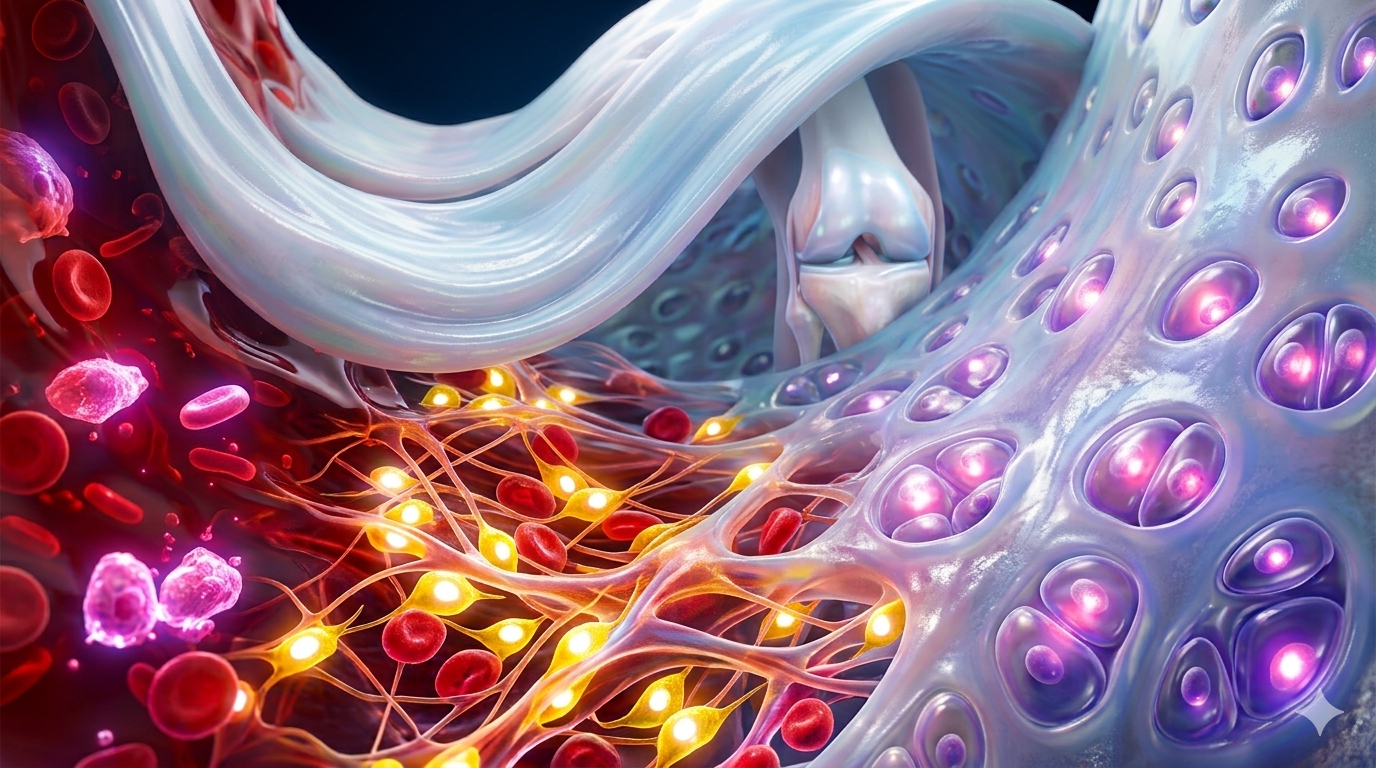
The one tissue that rebuilds itself every month turned out to have something to say to the one that never does.
Krystelle Dsouza
Read this story in a shorter version, written for younger readers
In fifth grade, 10-year-old Ilona decided she was going to rewrite living tissue for a living.
Lithuania had been out of the Soviet Union for a decade, and her older brother was bringing home consoles from the West. They played the horror games – Resident Evil, Silent Hill – for hours. What held her wasn’t the monsters. It was that nearly every villain was a scientist who used biotechnology.
“I was like, man, so you can basically affect people’s tissues, and you can definitely regulate the body itself,” she says. “You can create your own zombies or some mutant-like stuff.”
Mutant teenage ninja turtles were, as she puts it, a very hot topic back then.
Despite mediocre grades — her own admission — she made it into Vilnius University.
Ilona Uzielienė is now a senior researcher at the Innovative Medicine Centre, Department of Regenerative Medicine in Vilnius, and at Kaunas University of Technology. She and her colleagues have shown that particles shed by stem cells in menstrual blood slow the destruction of worn-out cartilage, and can make the one signal known to rebuild it work harder. The tissue they tested came from women aged 65 to 85, with osteoarthritis bad enough to have cost them the joint.
The tissue that doesn’t come back
She went looking for a disease that ruins lives without ending them.
“We know that osteoarthritis … doesn’t kill us as cancer does, but it makes our life miserable,” she said. “And living with it is a huge problem.” Roughly 595 million people had it in 2020 – about one person in thirteen.
Think of the sole of a shoe. It takes the wear so your foot doesn’t. Thin it enough, and every stone comes through. Your foot is the bone. The sole is cartilage.
The obvious answer is to replace the sole. That is where the trouble starts.
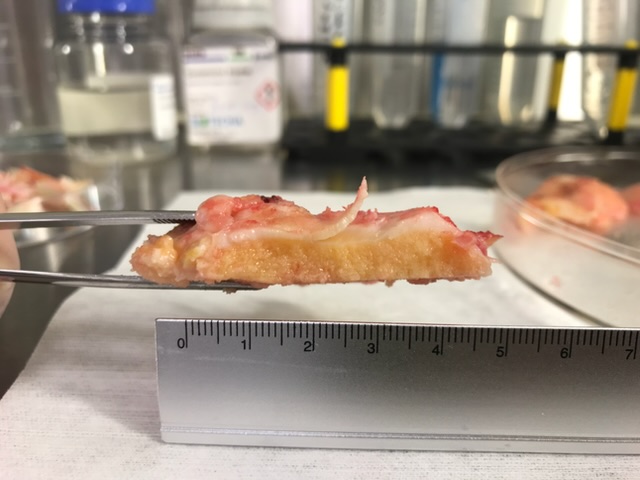
Cartilage has no blood supply. No vessels means no delivery of the cells and signals that repair tissue everywhere else in the body, so the damage simply stays. Medicine’s current options are to manage the pain or replace the joint.
Uzielienė kept circling the fact that one tissue in the human body rebuilds itself from scratch every single month.
The endometrium – the lining of the uterus – is discarded and regrown roughly 400 times in a woman’s life. Cartilage, which never rebuilds at all, sits a few feet away in the same body. Could the best regenerator be borrowed to fix the worst?
A paper she wasn’t looking for
Uzielienė needed a donor. That turned out to be the easy part.
She had entered her PhD eight months pregnant; however, she does not present that as a triumph.
She remembers being close to giving birth and, as she puts it, “a little bit scared of the science I’m going to face and how I’m going to deal with it.”
By the time the pilot study was ready to begin, the necessary bioethics approvals were in place, and a suitable donor sample had become available.
The study sourced the menstrual blood from donors aged 27, 32 and 34.
Fabrisia Ambrosio, of Harvard Medical School and the Schoen Adams Research Institute at Spaulding, points to the young ages of the women as likely related to the chondrocyte health seen later.
However, the real question is whether the cell composition and health vary across donors.
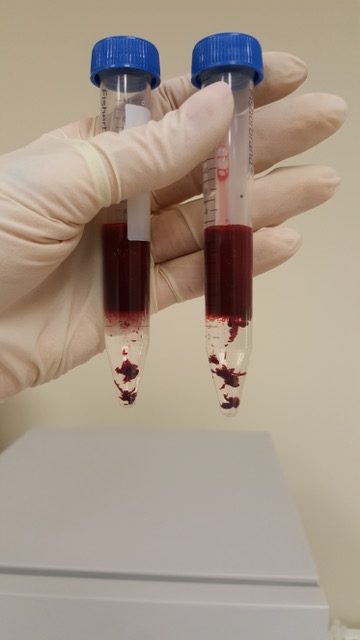
Caroline Gargett of the Hudson Institute of Medical Research and Monash University, in Melbourne, who discovered stem cells in the human endometrium, says her studies have found relative consistency in endometrial stem cell numbers from consecutive samples collected from each of 11 individual women for up to five cycles. She said it was similar for some proteins.
“Even when the values seemed outside of a putative ‘normal range’, they were consistent for a person, so outliers were consistent too for the cell types we measured,” she said. This included the mesenchymal stem cells found around blood vessels. She admitted that her team did not measure menstrual blood-derived endometrial stromal cells (often referred to as MenSC).
The cells that balked
The pilot did not do what Uzielienė wanted.
She had hoped the cells would become cartilage. Put stromal cells through the standard chondrogenic protocol – the recipe developed on bone marrow cells – and they should turn into chondrocytes, the only cell type cartilage contains. Menstrual blood cells went through the motions and underperformed. They laid down cartilage matrix, but less of it.
The reason turns out to be geography. Stem cells lean toward the tissues they live near. Bone marrow sits beside bone and cartilage, so its cells make bone and cartilage readily. Menstrual blood cells come from soft tissue and drift toward soft tissue – liver, nerve, muscle.
Also, real cartilage has four layers, and its collagen fibres run in particular directions. Cells in a dish do not. How much does that difference matter?
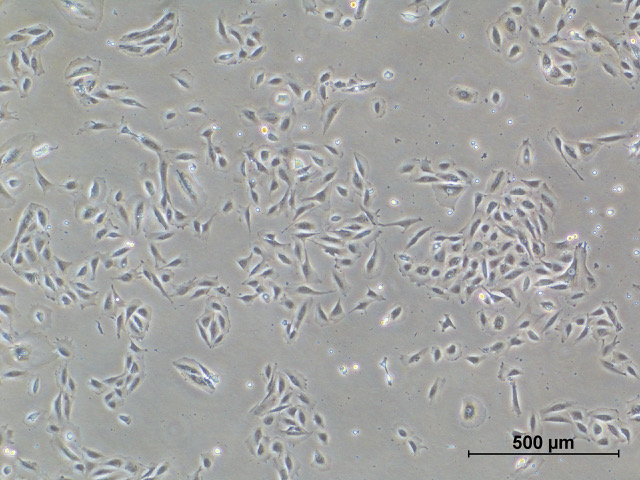
Kristin Schüler, a PhD candidate at the Institute of Bioengineering and Biosciences, Lisbon, said it matters considerably, as articular cartilage is a highly organized, three-dimensional tissue with distinct zones. “This organization is essential for cartilage to withstand and distribute the complex mechanical forces experienced within a joint,” she explained.
When chondrocytes are removed from this environment and cultured on a conventional two-dimensional surface, the biological, structural and mechanical context is lost.
Chondrocytes change their phenotype during prolonged 2D culture. “Therefore, a response observed in cells in a dish does not necessarily mean that exactly the same response will occur within human cartilage,” Schüler said.
However, Schüler, who has worked extensively on tissue engineering and bio-printing, praised the study’s design. “The researchers do not rely solely on conventional 2D culture. They begin with human chondrocytes in a 2D monolayer as a relatively simple proof-of-concept system, then move to three-dimensional chondrocyte aggregates, and finally investigate cartilage explants obtained from osteoarthritis patients. With each step, the biological complexity and physiological relevance increase.”
To stimulate the menstrual blood-derived mesenchymal stromal cells, Uzielienė’s team added activin A, a growth factor that matters in the reproductive cycle. It switches on transcription factors that drive collagen production, and it pushed the cells further than the standard protocol alone. Combined with transforming growth factor beta, she said, “you get a much more efficient effect.”
It still wasn’t enough. The cells made cartilage; they did not make good cartilage.
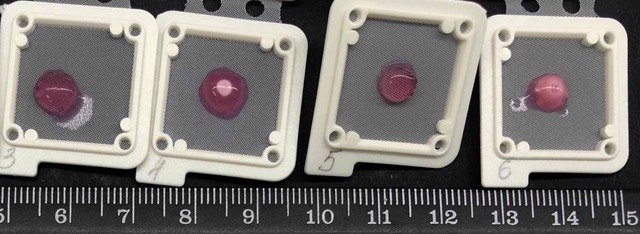
What they did instead was talk. Menstrual blood cells are unusually busy – they rebuild an entire tissue every month, and they secrete accordingly: growth factors, cytokines, anti-inflammatory signals. Pointed at chondrocytes, that chatter did more than the cells themselves ever managed.
“They did not become cartilage itself,” Uzielienė said. “But they were so active that they helped us stimulate cartilage cells.”
She does not offer this as consolation. It is how she says the work goes. “You can try something new, it doesn’t work, then you use it for different purposes, and it works from the other side.”
Schüler saw the increased extracellular matrix production as an encouraging sign, especially as the researchers detected key components associated with cartilage. But she cautioned against interpreting quantity alone as a measure of success: more matrix does not necessarily mean better cartilage.
Letters
Cells under stress do not go quiet. They send mail.
The messages are extracellular vesicles – packets a few hundred nanometres across, loaded with proteins and nucleic acids, budded off from one cell and taken up by another. Uzielienė called them letters – “letters that cells send to each other just to let them know what is happening currently in that particular type of organ or tissue.”
If the useful thing about menstrual blood cells is what they say rather than what they become, you don’t need the cells at all. You need the letters.
This is a cell-free therapy. Injecting living stem cells means injecting something that may behave unpredictably in the body you don’t fully control. Purified extracellular vesicles have no such autonomy. They carry cargo, deliver it, and are done. Gargett saw the extracellular vesicles as an advantage.
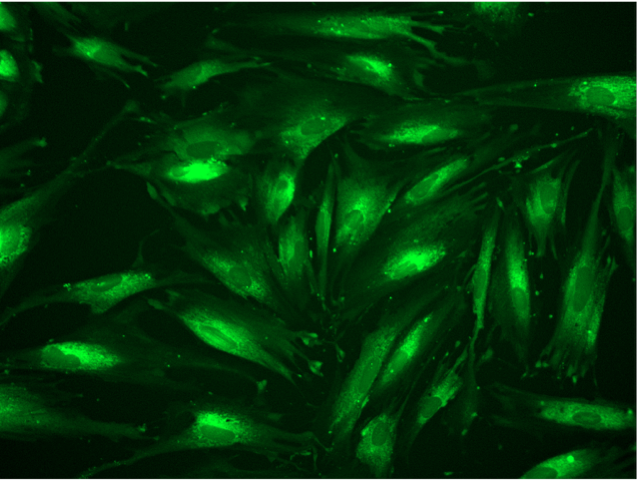
“Their membrane protects the molecular contents from enzyme degradation while they are present in menstrual fluid, and they provide an off-the-shelf product with markedly reduced costs as a result,” she said.
Back to the sole of the shoe. The vesicles did not lay down new rubber.
What they did was slow the wear. Cartilage under stress leaks its own structure into the fluid around it, and the team could measure the leak: cartilage oligomeric matrix protein, and the sugar-rich molecules that give the tissue its spring. Explants dosed with vesicles shed less of both at three days and at seven. When the team added interleukin-1 beta, the inflammatory signal that does much of the damage in a real joint, untreated cartilage lost its matrix and treated cartilage held on to it.
And where something else was already laying down rubber, the vesicles helped it along. Chondrocytes given transforming growth factor beta 3 – the growth factor known to push them to build – built more when the vesicles came with it, and switched on more of the genes for collagen and for the receptor that receives the growth factor in the first place. Without the growth factor, the vesicles on their own moved none of it. They did not change how fast the cells divided, how they moved, or what shape they held.
This is a narrower result than a cure, and Uzielienė does not oversell it. It is also, in a disease with nothing that halts it, not a small one.
The thing nobody expected
Uzielienė’s team works mainly with female tissue: osteoarthritis disproportionately affects women, the gap widening sharply after menopause. Their cartilage comes from hospitals – post-surgical tissue from ten donors, aged 65 to 85, all with osteoarthritis.
They were not looking for a hormonal link. “We didn’t have a link at the beginning,” Uzielienė said.
After menopause, oestrogen and progesterone fall. Less discussed is that the receptors for those hormones fall too – the docking points on the cell surface that let a hormone do anything at all. Chondrocytes carry them, and Uzielienė knew that in old cartilage there is barely a trace left.
Then the team saw those same chondrocytes, treated with vesicles from menstrual blood cells, start making progesterone receptors again.
One receptor. The oestrogen receptor did not move.
And it happened in the simplest of the three systems they used. In loose cells in a dish, the progesterone receptor rose after three days, in protein and in gene expression alike. In the cartilage explants – intact tissue, the model that means more – neither receptor moved at all.
Uzielienė thinks the tissue is the obstacle, and the reason is the same reason cartilage is hard to treat at all. Matrix is dense. A cell in a dish sits in a bath of vesicles and takes up what it likes; a cell inside cartilage sits behind a wall of collagen and proteoglycan, and most of the letters never reach an address. The paper says it flatly: matrix density, limited penetration, reduced uptake.
The paper is careful about the rest of it too. It reads the change as chondrocytes adjusting their own receptor levels, not as the vesicles doing anything hormonal in their own right.
Uzielienė is precise about the size of this. Preliminary, in a dish, in one model of three. She said so without prompting – the team is still at proof of concept, expanding the donor pool, trying to establish that the effect is real.
What she does with it from there, she is clear, is speculation. More receptors would not mean more hormone. It would mean somewhere to land for the hormone that remains, or the hormone a woman is prescribed. “We’re opening more doors for those hormones to enter,” she said, which leads to the proposition she is most interested in: that a woman might bank her own menstrual blood in her twenties and draw on it in her sixties. Not a donated therapy. Her own.
Nothing in the study tests that. It is the reason she wants to keep going.
Would cells from a younger woman also work in an older woman’s joint, given that the hormonal environment is completely different?
Ambrosio said data from Uzielienė’s study suggest yes.
“However, future studies should evaluate the ability of these menstrual blood-derived extracellular vesicles to improve cartilage integrity in vivo [in the body] to better understand the physiological relevance of the work,” she said.
According to Schüler, even though Uzielienė’s study took human cartilage explants from osteoarthritis patients, explants are still models which simplify and represent only an isolated part of what is happening in the human body.
“Osteoarthritis is a disease of the entire joint, rather than cartilage alone,” she said. Cartilage and its cells interact with bone beneath it, the joint lining, immune cells and other tissues and are continuously exposed to mechanical loading. In women, hormonal levels have also been shown to influence cartilage state. Cartilage explants in quiet trays do not interact with much else.
Schüler’s answer is to design tests that, even outside the body, let the cells interact with other joint tissues and take the mechanical loading a real joint delivers.
The paper’s own account of what it cannot yet say runs to four items.
Everything happened in dishes and in tissue already cut out of a person, never in a living joint. Everything was measured over days rather than months. The women who gave the menstrual blood were in their twenties and thirties, and the women whose cartilage received it were between 65 and 85, and nothing here establishes how much that gap matters.
The fourth is the one the others tend to swallow. Menstrual blood has no male donors. Roughly two osteoarthritis patients in five are men, and for every one of them this could only ever be someone else’s tissue – which returns the therapy to the donor matching, the screening and the immune questions that banking your own was supposed to avoid.
Uzielienė is untroubled by the asymmetry. The disease she went looking for is worse in women, and the source she found is the one they already have.
Holding it in place
The next problem is a plumbing problem. Vesicles injected into a joint wash out.
“We needed to find something that could hold them inside,” Uzielienė said. With Kaunas University of Technology, her group is building scaffolds that trap vesicles and release them under load – so that walking on the joint does it.
Uzielienė has worked in Tokyo, in Dublin, in Oslo, and came home on purpose. A scientist gets stronger by seeing how other labs work, she said, and then: “our country is strong enough to build a career here as well.”
At ten she wanted to build monsters. Three decades on, the ambition has narrowed considerably: she would be glad if a knee just keeps on working a little longer.
Read this story in a shorter version, written for younger readers

Krystelle Dsouza is a Mumbai-based journalist drawn to stories from the margins ,and to ideas that produce scalable impact.
Read the original article here.
Top image: Visual concept by Truly Curious, generated by Google Gemini.