
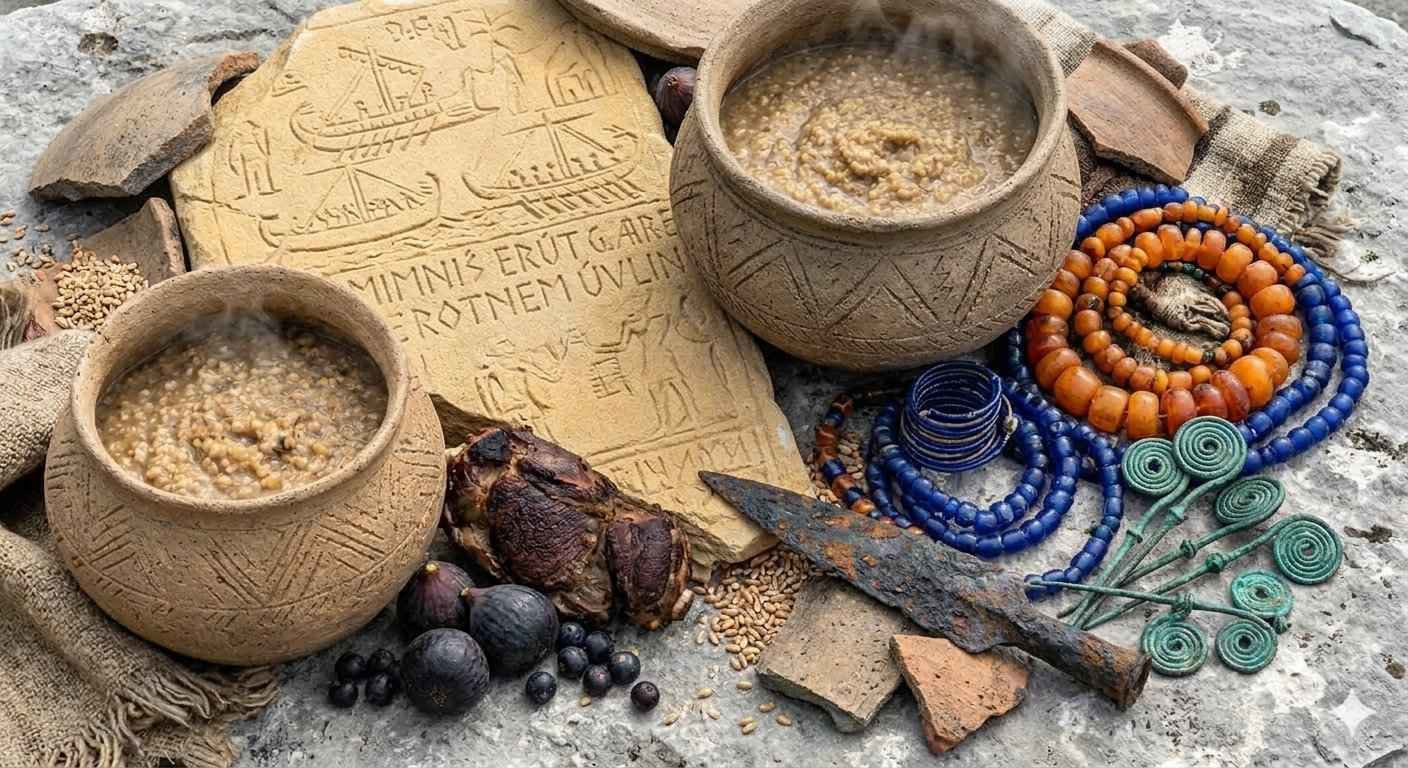
Novilara’s graves say one thing. Its bones, another. Zita Laffranchi, Marco Milella and their colleagues have spent 13 years learning to live with that
Gabriela Silva
Read this story in a shorter version, written for younger readers
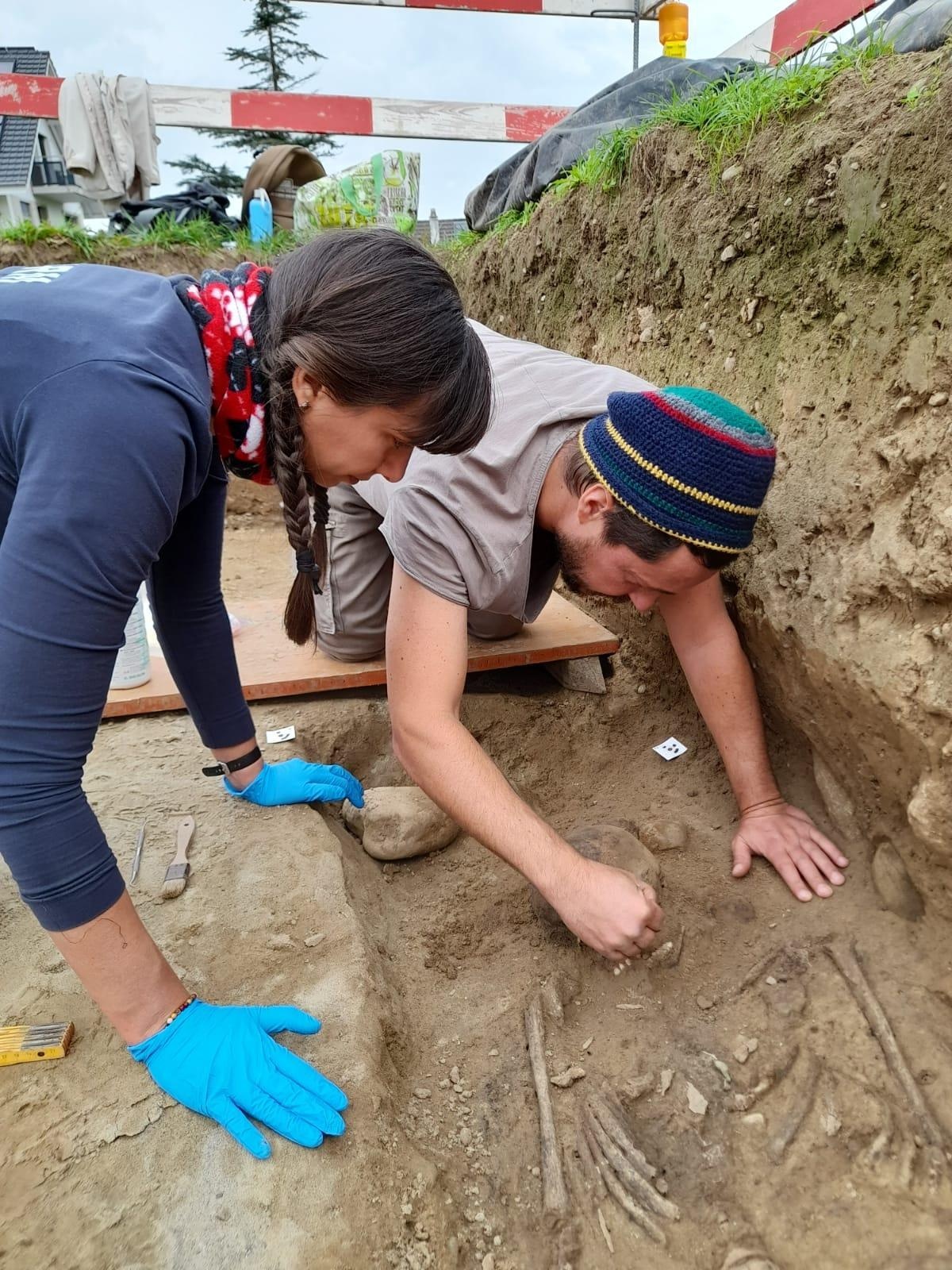
Zita Laffranchi and anthropologist Michael A. Beck De Lotto were called to a rescue excavation outside Pesaro, where the widening of a road had cut into the Novilara necropolis. This was a site archaeologists had known about – and debated – since the nineteenth century. Their team was large because the excavation had to move quickly so construction could continue.
“It was summer, so we worked with a lot of stress and really [over] lots of hours in the day – from seven to seven,” she said.
The team cleaned the remains, documented the burials and carried out the first anthropological assessments. It was a novel experience for Laffranchi, a researcher at the University of Cordoba in Spain, .
“I never saw something similar,” she said, describing weapons and brooches – fibulae, as archaeologists call them – beside the bodies. The skeletons were better preserved than any she had worked on. Some pits held one person, tightly flexed on their side. A few held two. Three contained ashes rather than bones.
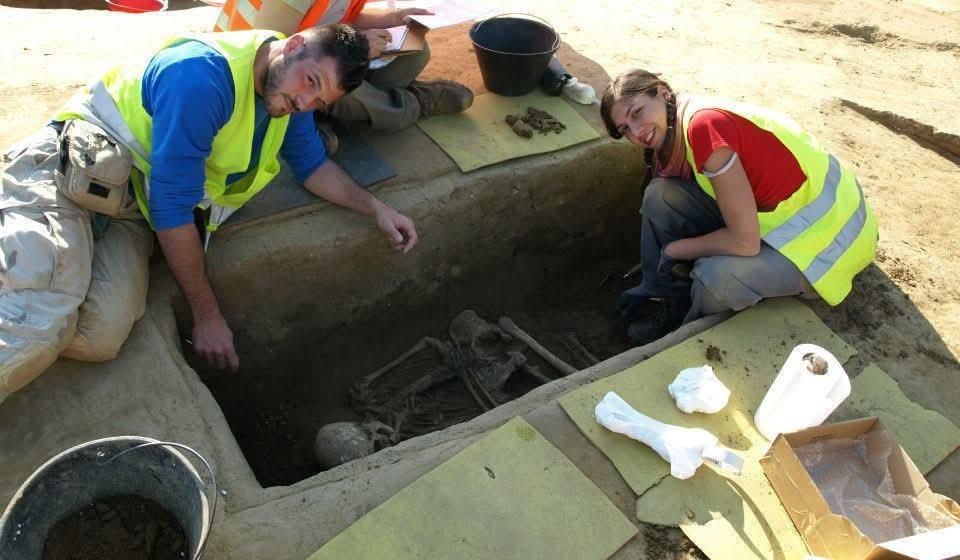
A rescue excavation can answer only basic questions in the field: a person’s sex, age and visible pathology. Going further required more time – and money.
“The adventure started in 2013,” Laffranchi said. “Now we are in 2026.”
Their work on the Novilara remains eventually resulted in a study in the Journal of Archaeological Science and a museum exhibition. It also sharpened a larger question: How much can be reconstructed about a person’s life when the body, the grave and the objects buried alongside it tell different stories?
Second opinions
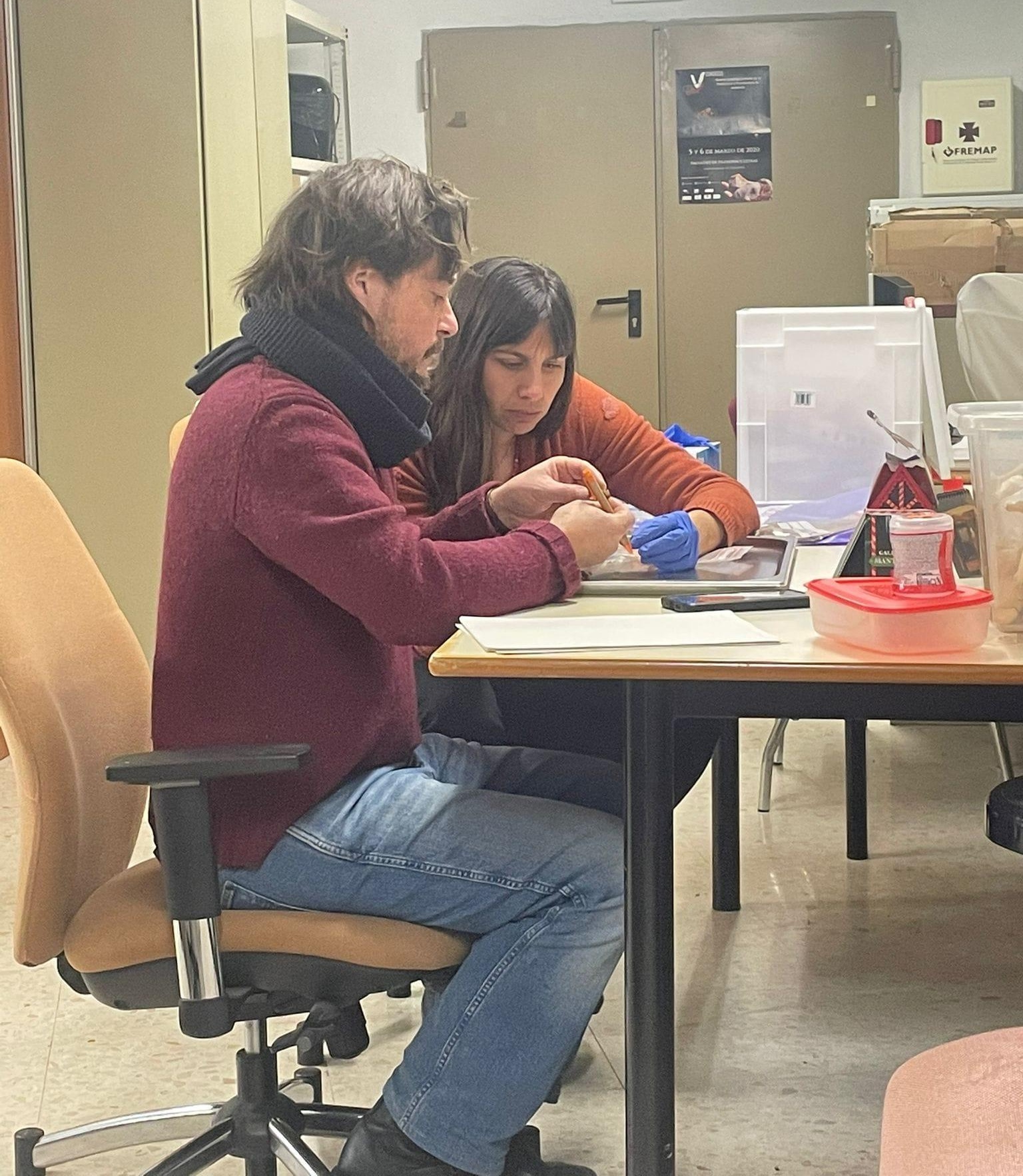
Marco Milella, from the University of Pisa in Italy, came to the project later, and from a different direction.
He already knew Laffranchi, Beck De Lotto and lead archaeologist Chiara Delpino. De Lotto worked at the Sapienza University of Rome, while Delpino came from the Soprintendenza archeologia, belle arti e paesaggio per le provincie di Chieti e Pescara (Superintendency of Archaeology, Fine Arts and Landscape for the provinces of Chieti and Pescara).
Milella’s interest lay where two kinds of evidence overlapped. His research, he said, explores “how social differentiation, social structures, gender divisions in the past were reflected biologically” – in diet, lifestyle, disease and, ultimately, the way people were buried.
The necropolis of Novilara, used during the eighth and seventh centuries BCE, is one of the largest known sites associated with the Picene cultural sphere. Its burials vary enormously. Some contain weapons, others items associated with female dress, still others sewing tools and amber. Some graves even included layers of sea pebbles in the burial pit. That heterogeneity raises questions about gender, status, identity, kinship and social organization.
Milella also works with statistics and was a co-investigator on the project that produced the isotopic analysis at the center of the new paper.
When the bones speak
For the 2026 paper, the team analyzed stable isotopes of carbon, nitrogen and sulfur preserved in bone collagen. Isotopes are variants of the same element with slightly different weights. Collagen is the protein scaffolding that can survive in bone long after soft tissues are gone. Different foods and environments leave different isotopic signatures, allowing researchers to reconstruct broad patterns rather than a literal menu or travel diary.
The original sample comprised 148 individuals. After analytical quality criteria were applied, the statistical dataset included 142 individuals for carbon and nitrogen and 141 for sulfur.
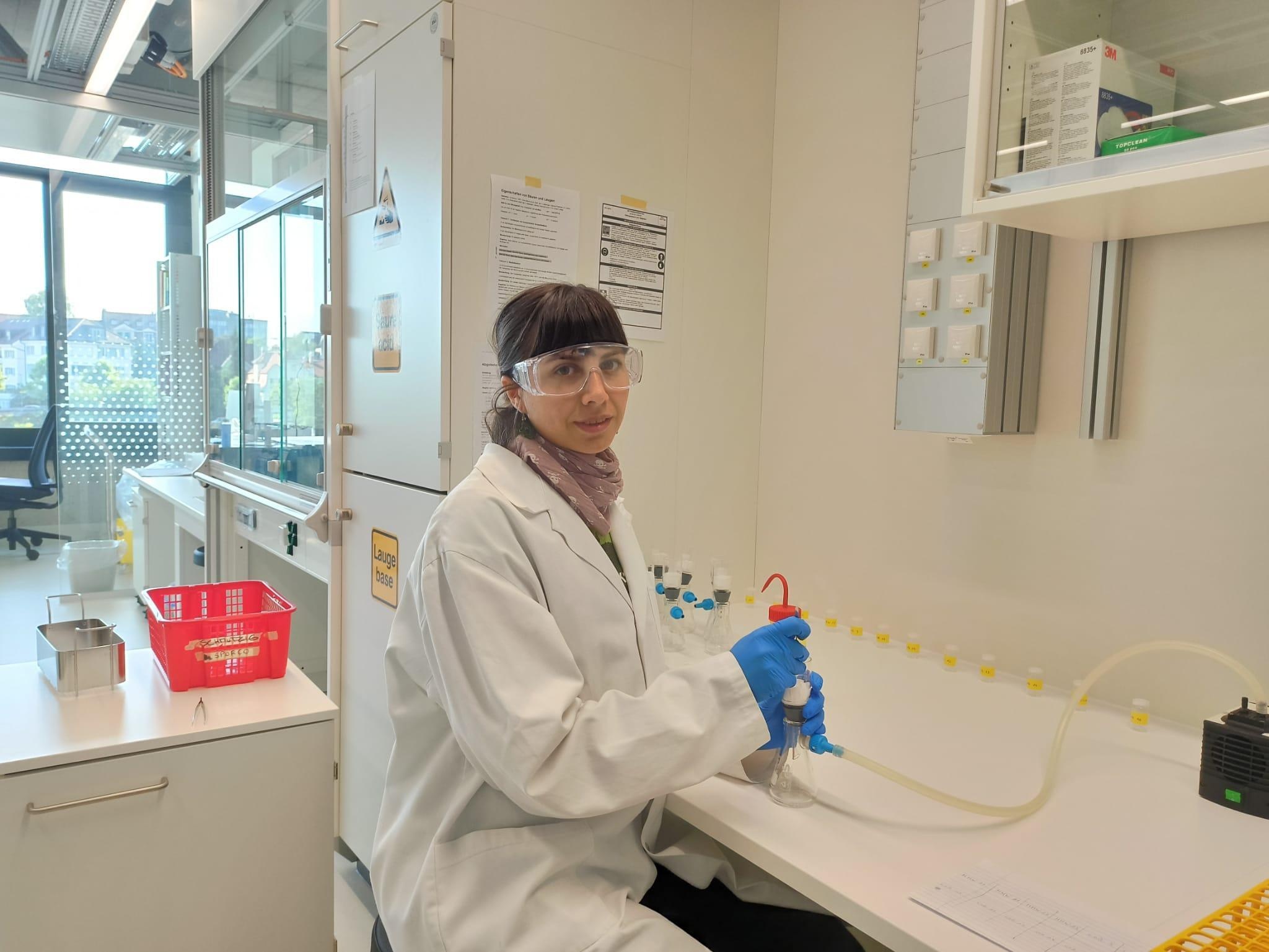
Carbon and nitrogen help reconstruct aspects of diet, while sulfur adds environmental information and can help identify individuals whose isotopic signatures differ from those expected within the local community.
Bone collagen reflects a relatively long period of a person’s life, particularly closer to the later years, rather than an entire biography. To recover signals from childhood, analyses such as those of strontium and oxygen isotopes in dental enamel would be more informative. The team did not yet have that data.
Signals of mobility
Adult males had significantly higher nitrogen isotope values than females and also differed in their carbon values. Their isotopic distribution was broader, while female values clustered more tightly. The researchers interpreted this pattern as evidence that males had, on average, greater access to animal protein and a more heterogeneous diet or lifestyle.
Milella was quick to complicate the picture. Animal protein does not mean meat alone: milk, cheese and other animal-derived foods can contribute to the isotopic signal. He cautioned against reducing the result to the simple claim that men ate better than women. Laffranchi also noted that the male carbon values were more heterogeneous, raising the possibility that some men had access to foods or environments different from those around Novilara – perhaps because they moved more frequently.
The paper itself is careful here. Five of the seven potential non-local individuals whose sex could be estimated were male, but that does not prove that women were less mobile. A woman who moved during childhood or adolescence could leave a signal in her teeth that adult bone collagen would not preserve.
The pattern at Novilara also does not appear in the same way at several other contemporary or later communities in central and southern Italy, including Fermo, Pontecagnano and Gabii. That makes it risky to turn Novilara’s results into a general rule about Iron Age men and women.
Few fish for those by the sea
Novilara lay only a few kilometers from the Adriatic. The community had connections with other coastal areas, and the famous Novilara Stele depicts a maritime scene. Yet the isotopic evidence showed no sign of substantial, regular consumption of marine fish.
“It was a bit surprising, but also not so surprising,” Laffranchi said. “It’s not the first time that archaeological isotopic study revealed that fish was not a staple food in a population.”
She emphasized that fish eaten only occasionally could disappear into the long-term average recorded in bone, and that taste or cultural preference may be impossible to recover isotopically.
Milella offered a more everyday explanation: if families already had cereals and livestock close to home, fishing regularly may simply not have been the most practical option.
“They already had stuff to eat, and they didn’t need necessarily to go out every day and fish, if they had their cereals and their meat just behind their door,” he said.
The sea, then, could have been central to trade, movement and cultural imagination without occupying the same place at the dinner table.
The young woman in grave 57
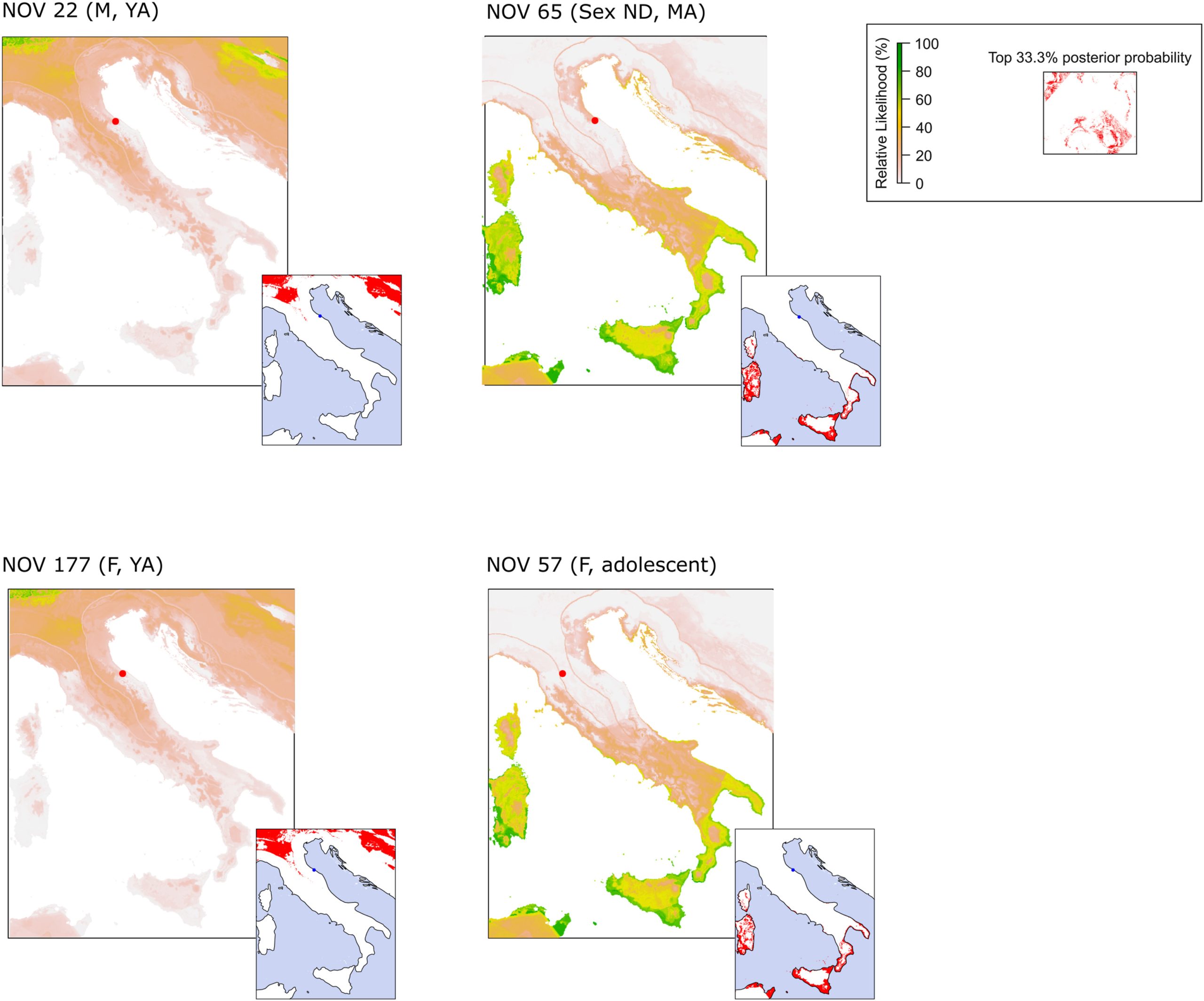
Among the potential non-local individuals, a young woman buried in grave 57 became particularly intriguing. She was approximately 15 to 20 years old, and her sulfur isotope values suggested a possible origin in southern Italy.
Her grave pointed north.
Laffranchi described a fibula decorated with a large piece of amber, a material probably carried through long-distance trade networks. The typology of the object had parallels in the Villanovan culture of northern Italy. Looking only at the object, it would be tempting to imagine that the young woman had also come from there. The sulfur evidence suggested another possibility.
“You expect that the object is giving you the origin,” Laffranchi said, “but the object can [be an import] for fashion. So it doesn’t always fit, the funerary aspect with the biological aspect.”
She made the point concrete: “You can come from Brazil, but you like a style of necklace we have in Italy, and you buy [it] and we trade it.”
But neither clue amounts to a birth certificate. Sulfur is not the most precise isotope for assigning an individual to a geographic origin, and confidence would increase if strontium and oxygen evidence pointed in the same direction. Bone may preserve information from the final years of the young woman’s life, while a tooth formed during childhood could record a different place.
“We missed a piece to really reconstruct the biography of this woman,” Laffranchi said.
Perhaps she moved. Perhaps the brooch moved and she did not. Perhaps different stages of her short life took place in different regions.
Who writes the evidence
Milella explained why biological and funerary evidence often fails to line up neatly. The objects placed in a grave were not chosen by the person who died.
“It’s a ritual, theatrical representation enacted by the survivors, not the dead,” he said. A funeral may express the family, the social group, the value attached to certain objects, fashion or symbols of status. Those elements may not directly reflect the dead person’s social identity or geographic origin.
He returned to the same point a few minutes later: burials are representations decided “by the living, not the dead.”
Pasquale Miranda, an archaeologist at the University of Naples Federico II who has published specifically on the Novilara necropolis and Picene funerary archaeology, has met the same problem from the other side of the grave.
He said he has on several occasions classified burials as male or female from their grave goods – weapons and razors on one side, spinning and weaving tools and certain ornaments on the other – only for later scientific sex determination to show the opposite. The first time it happened, he was “naturally surprised.” It did not make him abandon archaeological interpretation. Instead, he became more careful with language: he uses gender for inferences drawn from grave assemblages, and sex when biological determination is supported by anthropological and scientific analysis.
Miranda described the influx of hard-science methods into archaeology as a revolution comparable to the arrival of radiocarbon dating. But he also cautioned that archaeologists and other scientists are “often still not fully open” to perspectives outside their own disciplines.
The study found no clear association between funerary indicators used as proxies for socioeconomic status and the isotopic data, nor between isotope values and non-specific osteological markers of developmental stress.
That does not mean social differences did not exist. It means they cannot be reduced to a simple equation in which a richer grave necessarily leads to a richer diet and, in turn, a healthier body.
Those stubborn facts
“I would have loved to see a nice correspondence between the isotopic data, the funerary data and osteological data. It absolutely didn’t happen,” Milella said.
A neater result might initially have been satisfying, but the lack of a clean correspondence ultimately made the findings more interesting – and, in Milella’s view, more realistic.
“We are analyzing people, not data points. People are weird and variable, and they behave according to a mosaic of psychological, social, cultural reasons,” Milella said.
Milella said he often tells his students to be suspicious when everything goes exactly according to plan.
Two ways of looking at the same dead
“I’m more the lab person,” Laffranchi said. She handled the skeletons and worked on collagen extraction and the chemistry.
“As I touched the skeleton, I saw really each individual,” she said.
Milella works more with statistics and the broader view of the dataset.
When two or three individuals appear with unusual values, Laffranchi returns to her notes on sex, pathology and burial characteristics. She and Milella then try to bring the individual case together with the population-level pattern. They do not always agree, and both described that process as productive.
As Milella put it: “An article is like a conversation.” Each author enters that conversation with a different scientific and personal mindset. The aim is to follow where the data leads – while also knowing when to restrain an interpretation in a field where many combinations may be possible.
Between the lines
Asked what readers of the finished paper would never see, Laffranchi and Milella gave different answers.
Laffranchi returned to the excavation team: the people who lifted and documented the skeletons under strict time constraints, long hours and summer heat.
“Without their good hands in doing the excavation, we had no material at all to study,” she said.
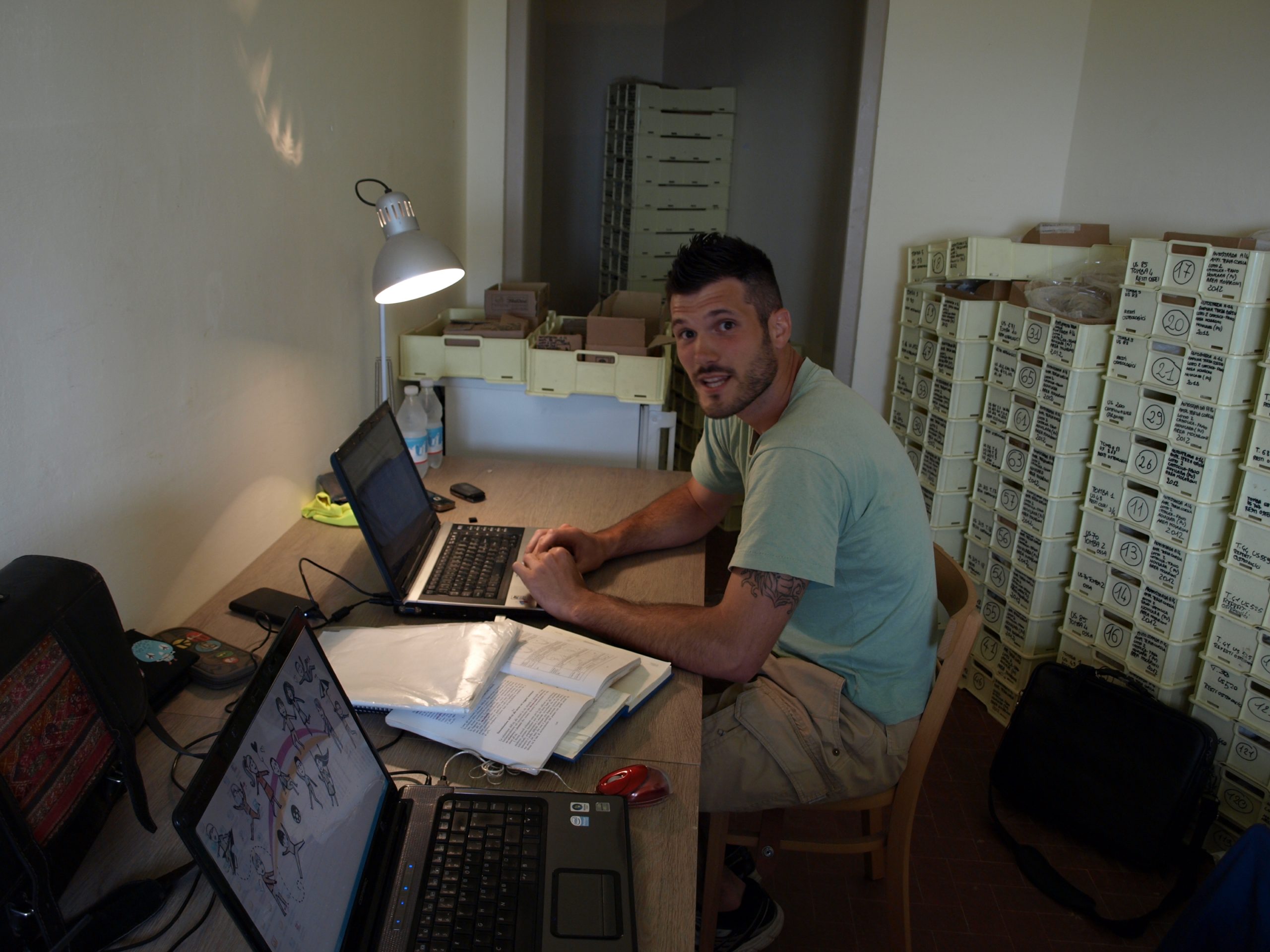
Milella pointed to another kind of invisible work. Before a graph can be interpreted, researchers spend hours reading what other teams have found, comparing archaeological contexts and asking whether similar – or completely different – patterns have already appeared elsewhere. He described that process of contextualizing results as one of the most difficult parts of research, but also one of the most interesting.
There are also things that can no longer be recovered. Among the human remains from nineteenth-century excavations, many individuals are represented only by skulls because those were often the parts collected by anthropologists at the time. Teeth may still make certain analyses possible, but information about pathology, activity and the rest of the skeleton has been lost.
The gaps to fill
Milella still wants to understand when, during childhood or adolescence, the social differences visible between adult males and females began to take shape. The current evidence cannot answer that question well because identifying biological sex in non-adults and reconstructing earlier phases of life require other approaches, including proteomic and paleogenetic analyses.
He also considers the mobility results preliminary and would like to combine the sulfur evidence with strontium and oxygen isotope analyses to achieve finer geographic resolution – particularly for cases such as the young woman in grave 57.
“To address this question, we need money,” Milella said. The team is now preparing new funding proposals.
Miranda sees unfinished work at the site, too.
For Novilara, he would next combine new excavations, scientific results and a finer chronology to examine the socio-ritual dynamics of the Molaroni and Servici burial grounds. The ancient world, he added, does not always follow the logics researchers expect, and some dimensions may remain beyond recovery where no written texts survive.
The graves tell one story. The bones tell another. Chemistry adds a third. None, on its own, can resurrect the stories of those buried there.
The people of Novilara did not fit into neat categories: male and female, local and non-local, more or less richly furnished burials. They were, in Milella’s words, people – not data points.
Perhaps a little messy reconstruction is more faithful to the truth than a story in which every piece fits perfectly.
Read this story in a shorter version, written for younger readers

Gabriela Silva is a Brazil-based writer who enjoys making scientific research accessible. She has a background in food science and technology and is pursuing a master’s degree in plant production.
The link to the original article
Lead image: Visual concept by Truly Curious, generated by Google Gemini
The study was supported by the Swiss National Science Foundation . The archaeological work at Novilara were directed by the Soprintendenza Archeologia, Belle Arti e Paesaggio per le province di Ancona e Pesaro e Urbino, that also provided access to the specimens and to the archaeological documentation.