
A shorter version of Mina Rehman’s story, for younger readers..
Read the full story of this research
When Fabio Antonini was ten, his parents gave him a small telescope. It was a cheap little thing. He pointed it at the night sky and never really stopped looking.

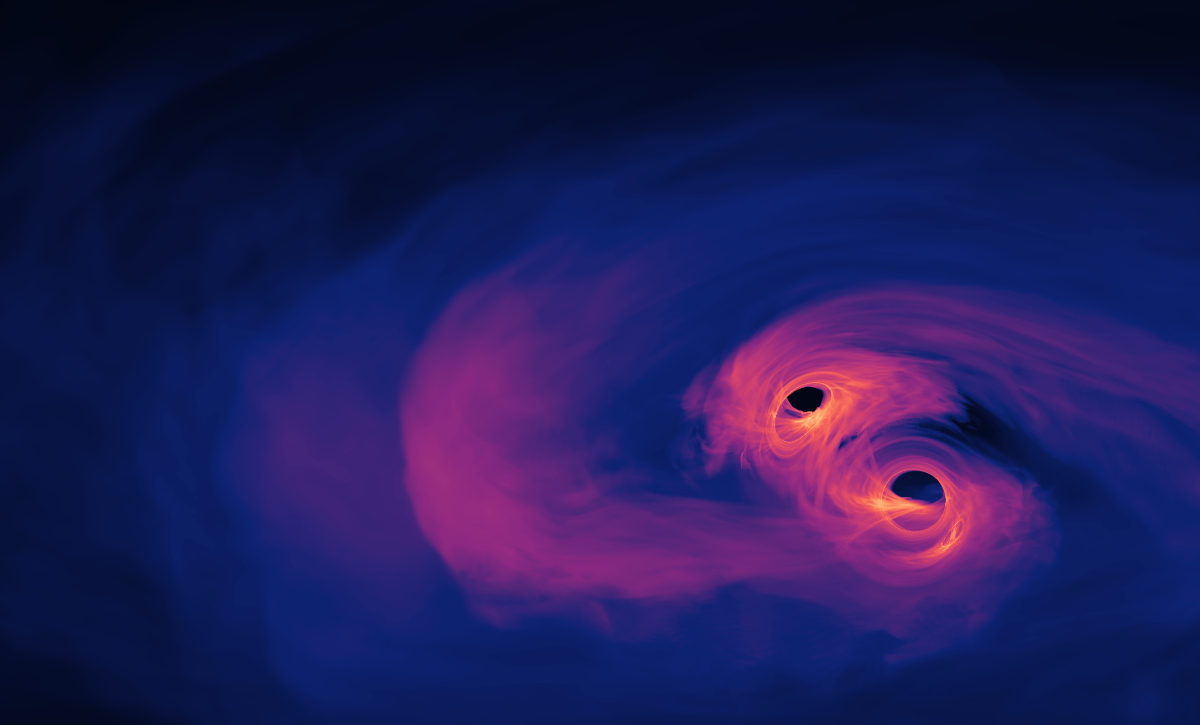
These days he studies black holes at Cardiff University, in Wales. A black hole is a spot in space where gravity pulls so hard that nothing can get back out. Not even light.
Black holes are what is left behind when very big stars get squeezed in by gravity. But they do not come in every size. There are smaller ones and really big ones, but not so many in between.
Here is why. A star is always being squeezed by its own weight. It is light deep inside pushing its way out that holds the star up. In the very biggest stars, that light is almost the only thing holding them up.
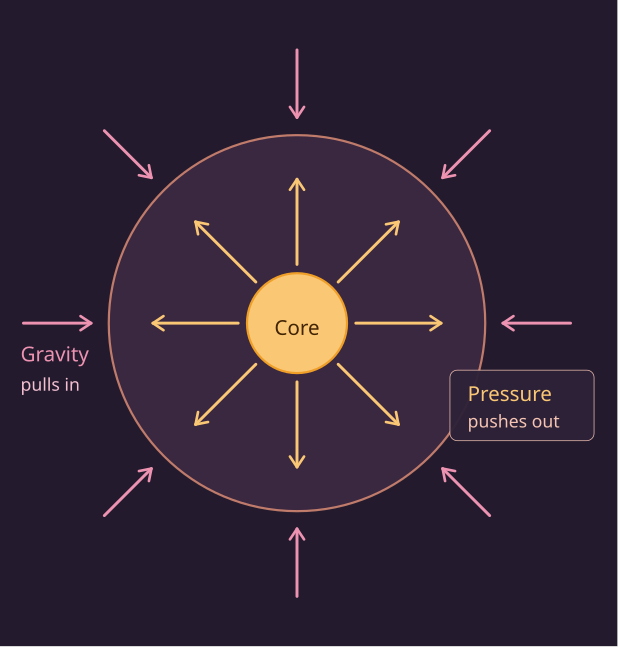
When the middle of such a star gets hot enough, something strange happens. The light starts turning into tiny bits of matter. Matter pushes too, but nowhere near as hard as the light did. The star loses most of what was holding it up. It falls in on itself, gets hotter, and blows itself to pieces. Sometimes nothing is left at all.
So dying stars should not leave black holes holding more matter than about 50 Suns. Scientists call that amount of matter its mass. Not until you get to stars so huge that they make black holes with more than 130 Suns of mass.
The trouble is that we keep finding black holes in between.
We find them by listening. When two black holes crash together, they shake space itself, a bit like a stone dropped in a pond. Machines on Earth can feel those ripples arriving. From the shape of a ripple, scientists can work out how much matter each black hole held.
Antonini thinks the ones in between were never made by stars. He thinks they were made by other black holes coming together.
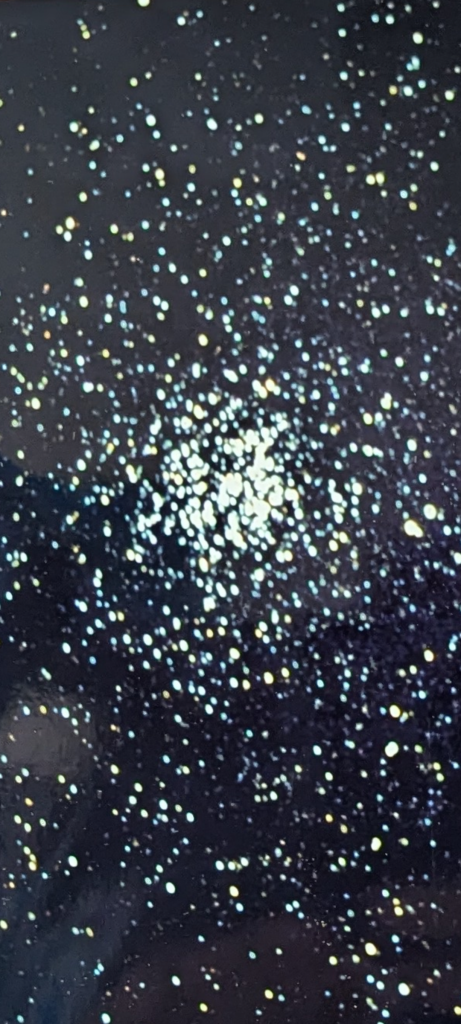
In crowded corners of space, black holes are packed close together. Two of them can crash and join into a bigger one. That bigger one can crash again. Nothing broken, no rule bent. Those black holes just got there another way.
A good scientist doesn’t want to just know that they are right. They want to know the truth, even if they themselves are wrong. So Antonini went back through his work looking for a mistake. He could not find one. Other scientists have checked since, and they agree that something does change at that size. They are still arguing about what it means.
Antonini says the work is fun. He is still doing what he did at ten – looking up and wondering what is out there. He just has much stranger tools now.