
A shorter version of Krystelle DSouza’s story, for younger readers.
Read the full story of this research
When Ilona Uzielienė was ten, her brother brought home video games. She did not much care about the monsters. What caught her was that the villains were nearly always scientists, and what made them frightening was that they could change how a body worked.
She decided she wanted to do that.
She is a scientist in Lithuania now, and she works on knees.
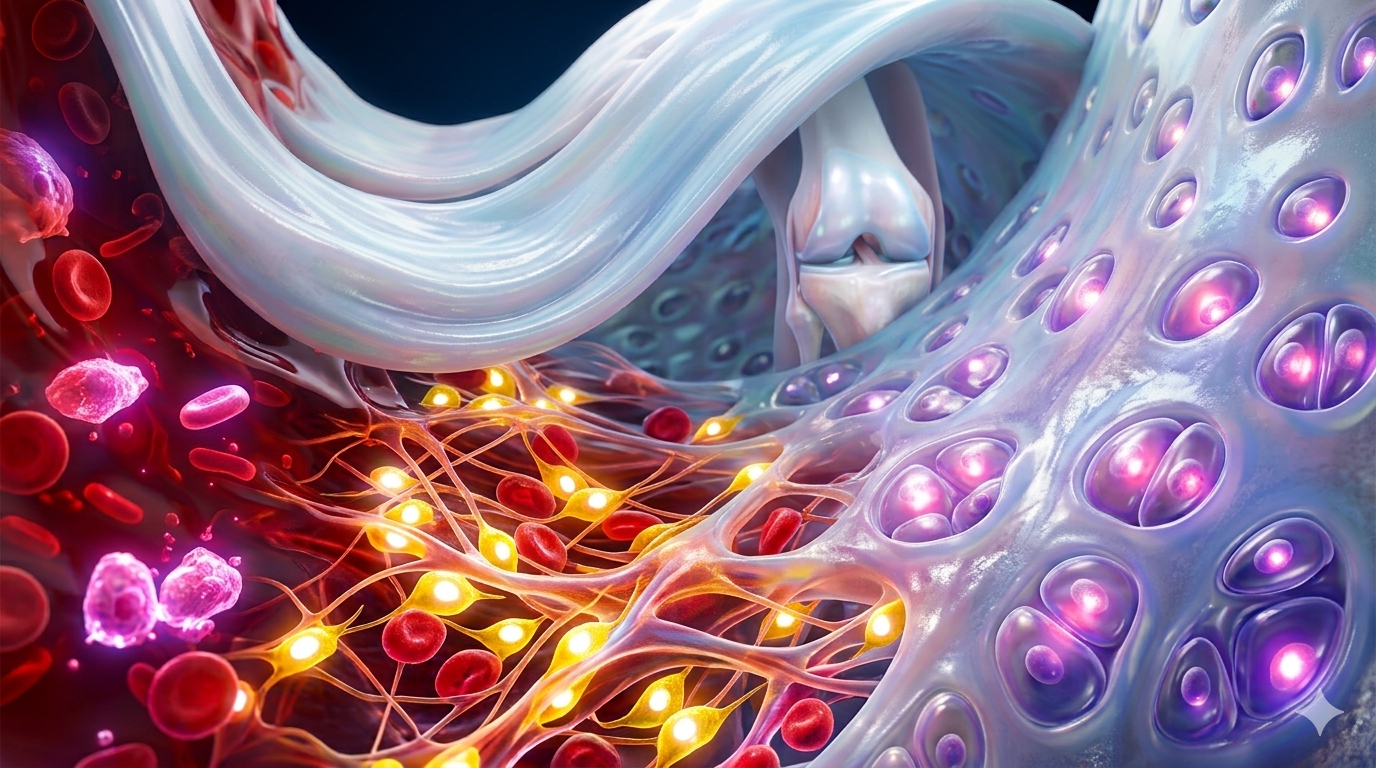
Inside a knee, at the end of each bone, there is a smooth, springy layer called cartilage. Think of the sole of a shoe. The sole takes the wear so your foot does not have to. Wear it thin enough and every stone comes through.
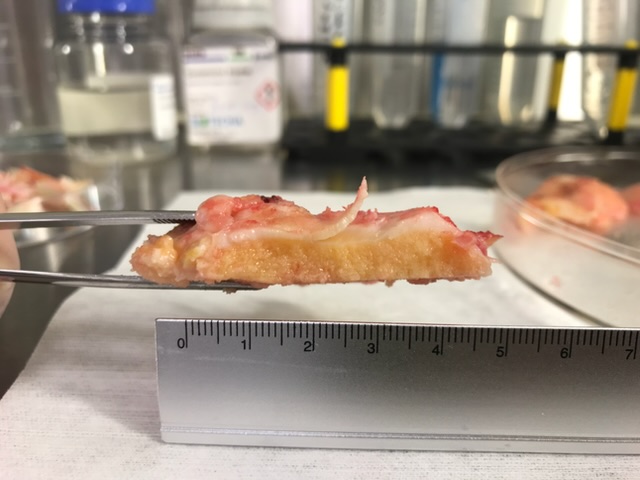
Cartilage wears out the same way, and about one person in thirteen is living with it. It hurts to walk. It does not get better. Cuts heal because blood carries repair cells to them, and no blood reaches cartilage at all. Doctors can dull the pain, or cut the whole joint out and put in a metal one.
She kept thinking about something odd. One part of the body throws itself away and builds itself new every single month. It is the lining of the womb, where a baby grows. A woman’s body builds it new about 400 times in her life, and the old lining leaves her body each month. That is what she collects.
So the best rebuilder in the body sits a short way from the worst. Could one help the other?
She collected cells from that lining and tried to turn them into cartilage. They tried. They were not good at it.
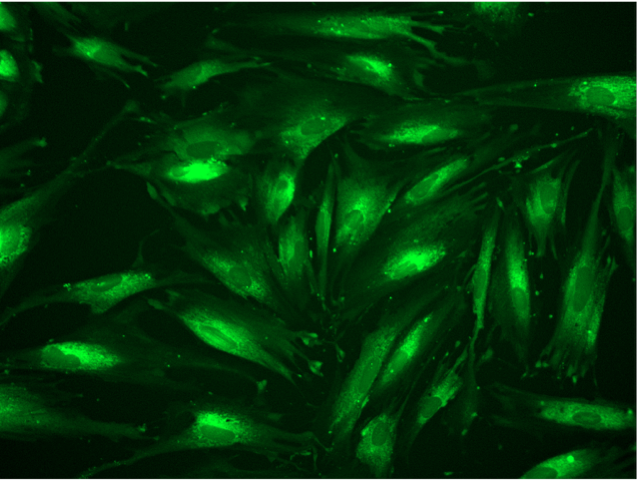
But those cells are busy, and busy cells talk. They send out tiny packets, far too small to see, filled with instructions for other cells. She calls them letters.
She stopped using the cells and used the letters instead.
The letters did not build new cartilage. What they did was help worn cartilage hold on to what it still had, and help it listen better when the body told it to build.
This is early work. It happened in dishes, and in small pieces of cartilage from operations, never yet inside a living knee.
There is one more catch. Men get worn-out knees too, and about two in every five people with this problem are men. But only women’s bodies make the lining these letters come from. So a man could only ever be given someone else’s, which brings back all the difficulties of using another person’s cells.
At ten, she wanted to build monsters. These days she would be happy if somebody’s knee kept working a little longer.